Experience the making of Oshima Tsumugi
When you visit Hara Kinuorimono Co., you can watch and or try to weave and dye Oshima Tsumugi textile.
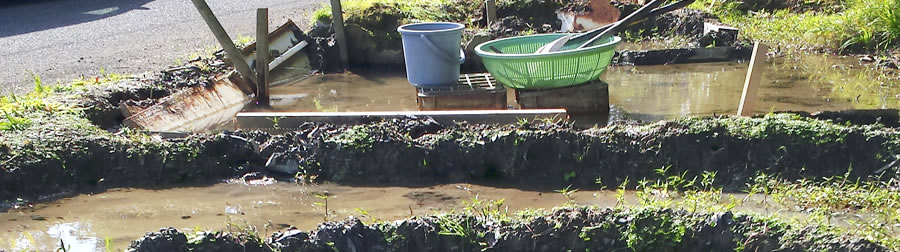
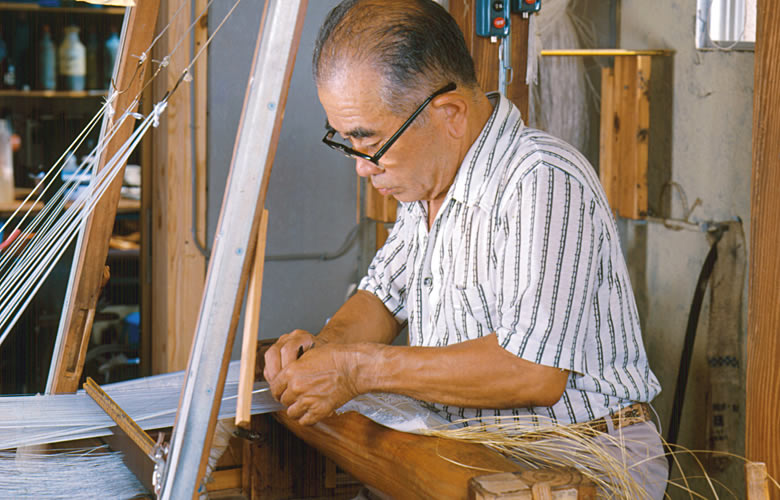
Shimebatai, binding.
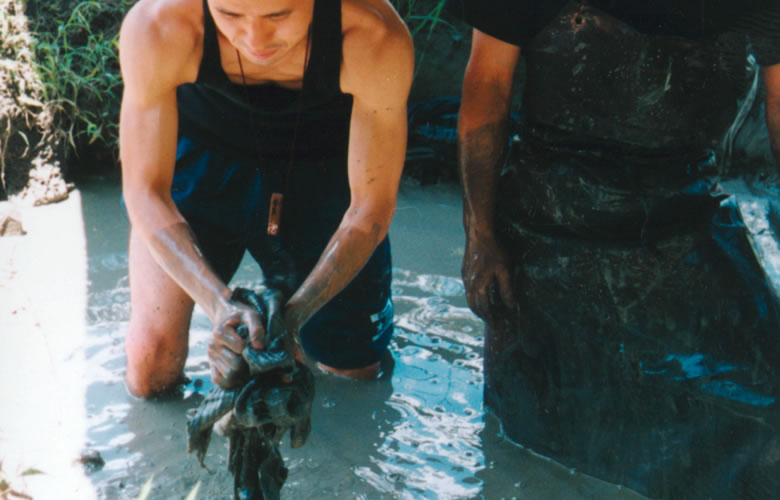
Mud-dyeing.
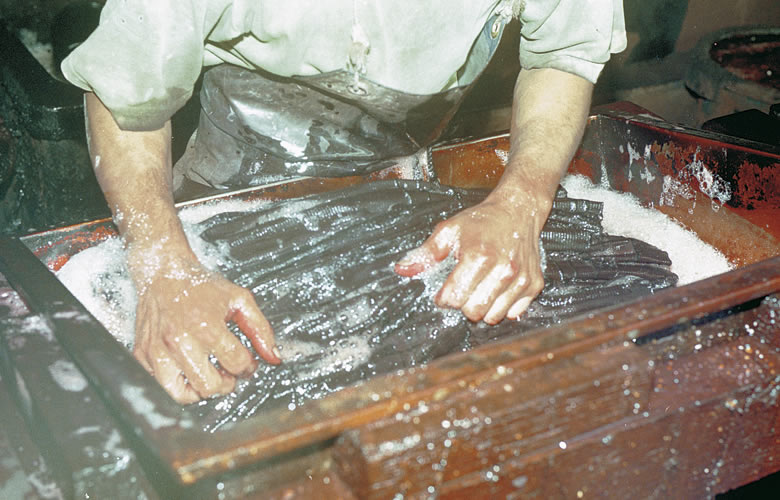
Dyeing with fluid extracts taken from the yeddo hawthorn.
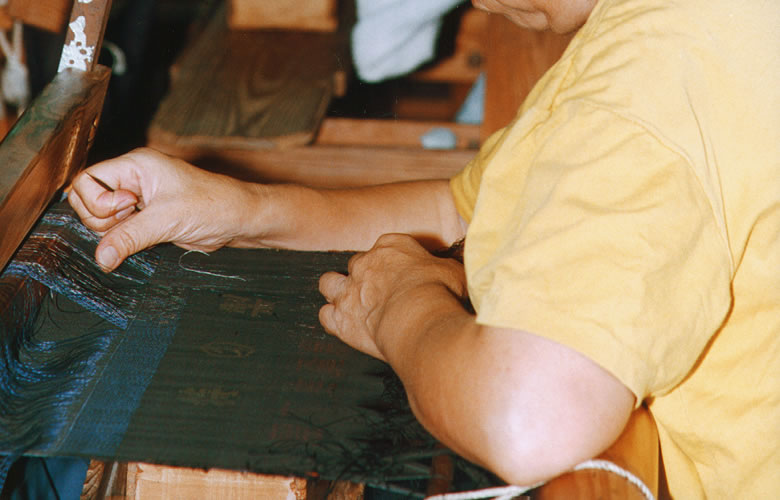
Weaving.

Experience the weaving of Oshima Tsumugi textile.
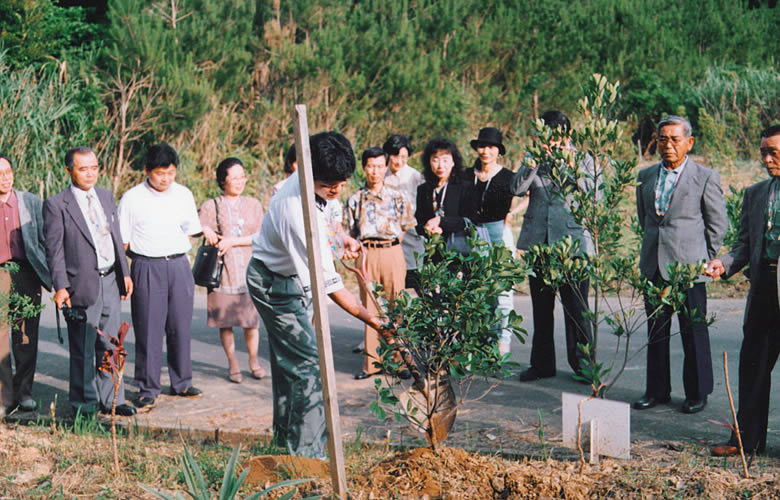
If the season is right, visitors to Hara Kinuorimono Co. can plant a tree to mark their visit to the Amami Islands.
■The Origins of Oshima Tsumugi
The true origins of Oshima
Tsumugi are unknown. But it is known that the first Oshima Tsumugi had
very simple patterns, or no pattern at all on the textile. Gradually,
the leaves of Japan's sago palm, which grows naturally in the Amami
Islands, and the pattern on the back of the poisonous snake, Habu, which
inhabits the Islands, were used in designing the patterns on Oshima
Tsumugi textiles. Soon, newly invented binding machines, called Shimebata,
made it possible to create very complicated patterns on Oshima Tsumugi
textiles. Around the same time, a unique method of dyeing the textile
was discovered: using chemical reactions caused by tannic acid extracted
from the tree known as the yeddo hawthorn and by iron from mud in the
Islands' paddy fields. This technique created the somber-colored texture
which is unique to Oshima Tsumugi. Weaving machines were also improved
over the years, and this helped increase the production of Oshima Tsumugi.

In 1975, Oshima Tsumugi was designated one of Japan's Traditional Craftworks.
Trademark of Japan's Traditional Craftworks.
■Characteristics of Oshima Tsumugi
Its somber color, its light weight, its warmth and the fact that it is not easily wrinkled or worn out are the best known characteristics of Oshima Tsumugi. The elegant and distinctive appearance of Oshima Tsumugi has won it a reputation as among the best Kimono textiles in Japan.
In order to make Oshima Tsumgi textiles, worn as Kimono, more than thirty different processes are applied to it before weaving starts. It also takes about forty days to complete the weaving itself.
